 01
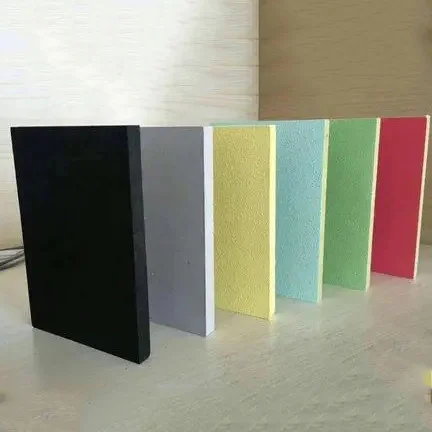
Fiberglass Panels
Glass-fiber boards for acoustic and thermal selection. Choose the panel construction and facing to suit the ceiling or cavity detail.
Selection focus: thickness, density, facing and edge detail.


GZSEASON · Architectural materials
Fiberglass panels, rock wool panels and acoustic black fleece for building interiors and metal ceiling assemblies. Select the material, then coordinate the complete construction.
01 / Material range
Choose a board for the required construction depth, or a thin backing for a perforated metal face. Their roles overlap, but their selection criteria are different.
01
Glass-fiber boards for acoustic and thermal selection. Choose the panel construction and facing to suit the ceiling or cavity detail.
Selection focus: thickness, density, facing and edge detail.
 02
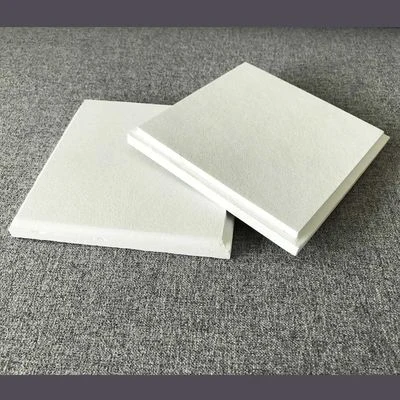
Stone-wool boards for ceiling and insulation applications. Evaluate the selected grade as part of the complete assembly.
Selection focus: thickness, density, facing and support.
 03
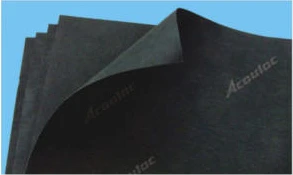
A thin acoustic backing for perforated ceiling panels. Conceal the view through perforations while coordinating the acoustic layer behind the metal face.
Selection focus: fleece grade, bonding and perforation compatibility.
02 / Selection guide
| Selection point | Fiberglass panel | Rock wool panel | Acoustic black fleece |
|---|---|---|---|
| Primary role | Porous panel or infill | Porous panel or infill | Thin backing layer |
| Key selection fields | Thickness, density, facing | Thickness, density, facing | Grade, mass per area, bonding |
| Metal ceiling interface | Support and retained depth | Support and retained depth | Bonded or retained backing detail |
| Performance comparison | Selected grade + mounting | Selected grade + mounting | Perforation + backing + cavity |
Compare acoustic data at the same thickness, facing, cavity depth and mounting condition. A denser material is not automatically the better acoustic choice.
03 / Metal ceiling integration

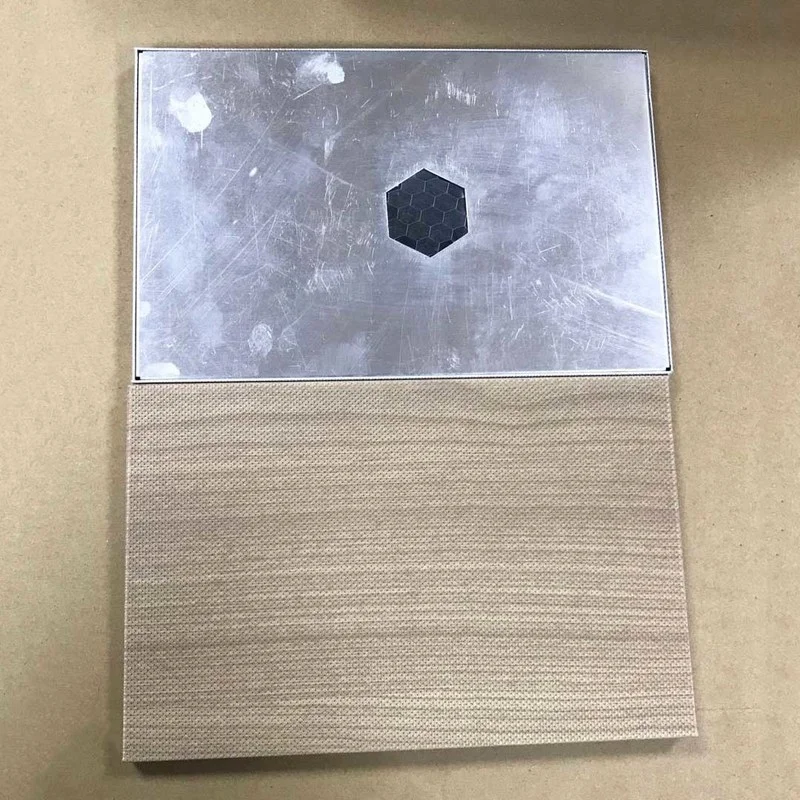
Acoustic backing behind a perforated metal face.
A visually consistent ceiling needs more than a matching tile. The face, backing, infill and cavity all affect the result.
Coordinate the perforation pattern and fleece grade. Keep adhesive and finishing details consistent with the intended construction.
Specify support, retained thickness and cavity depth. Avoid unintended compression or gaps at panel edges.
Coordinate lights, diffusers and access points before approval. Openings and junctions can change the installed acoustic result.
Related metal finish
Keep the metal aesthetic. Define the acoustic build-up.
Perforated and ultra-micro-perforated metal panels are available in the GZSEASON range. Evaluate them with the selected fleece, infill and cavity rather than assigning a standalone absorption claim to the metal face.
For meetings, reading and office spaces, coordinate the visible finish with the reverberation target and the installed ceiling detail.
04 / Project fit
Fiberglass, rock wool and black fleece give the specification distinct material paths instead of treating every acoustic layer as the same product.
The range sits alongside clip-in, lay-in and hook-on metal ceilings, making the face, backing and support detail a practical starting point for discussion.
Metal panel series include coating and color options. Match the visible face to the interior while keeping acoustic layers specified separately.
05 / GZSEASON in Guangzhou
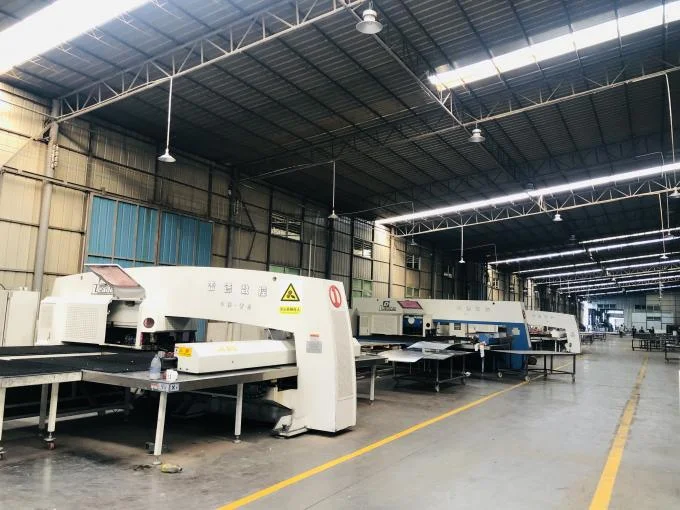
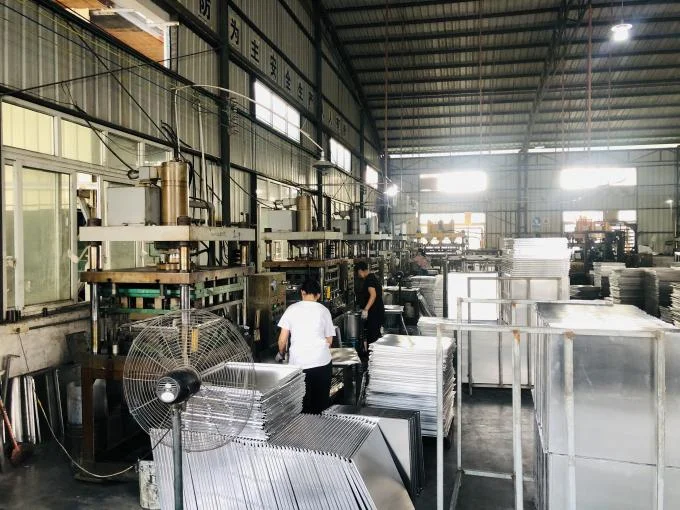
Our manufacturing presentation includes standard and customized metal-product workshops, coating operations, storage and loading.
For acoustic projects, define the metal panel and the associated insulation or backing as separate specification items. This keeps the finish, construction and material grade clear throughout the order discussion.
06 / Buyer questions
Sound absorption reduces reflected sound within a room. Sound insulation limits sound passing between spaces. Fiberglass, rock wool and acoustic fleece can contribute to a designed acoustic assembly, but an absorbing panel alone does not make a room soundproof. For privacy between rooms, assess partitions, ceiling voids, junctions and leakage paths together.
Compare the actual grades at the required thickness and mounting condition. Density alone does not establish which material performs better. Check frequency-dependent absorption, facing, weight, moisture exposure and the applicable fire documentation. GZSEASON lists both material families, allowing the material decision to follow the project specification.
Black fleece is a thin backing layer behind perforated metal. It can contribute acoustic resistance and conceal the rear construction. A thicker porous infill has a different role and may change absorption across the frequency range. Choose fleece alone or a combined backing arrangement from the tested assembly rather than treating the layers as interchangeable.
For absorption, compare NRC or αw together with frequency data, panel facing, thickness, air gap and mounting details. NRC and αw use different rating methods. For sound insulation, examine assembly ratings such as Rw or STC and the full wall, floor or ceiling construction. A material value cannot be transferred to a different installed build-up.
A solid metal face is generally reflective. A perforated or micro-perforated face can form part of an absorbing construction when its openings, backing and cavity are designed together. The related metal-panel range provides a finish option; the acoustic configuration and its supporting data must be agreed for the selected system.
Confirm the material grade, dimensions, thickness, facing, edge, support method and quantity. For metal-faced assemblies, include perforation details, fleece or infill, cavity depth and service openings. Match the offered product and test documentation to the project specification before approval. Sample, packing and delivery arrangements are agreed for each order.
07 / Project inquiry
Share your ceiling type, material preference and project specification.
Include panel dimensions, thickness, quantity and the acoustic or thermal criteria that apply. For perforated metal ceilings, add the backing and cavity detail where available.
Browse architectural products ↗